Reducing food waste is a critical step in building a sustainable future, and local schools are stepping up to make a difference. Thanks to a partnership between Clean Memphis and the World Wildlife Fund (WWF), funded by the Environmental Protection Agency’s (EPA) Consumer Recycling Education and Outreach Grant, seven schools in Memphis are leading the charge.
Project Green Fork, a program of Clean Memphis, is spearheading these efforts by conducting food waste audits in three Compass Community Schools and four Memphis Shelby County Schools. Through comprehensive food waste audits and hands-on initiatives, students and educators are gaining a clearer picture of how much food goes uneaten and finding creative ways to redirect it.
The goal of this initiative is to foster a culture of environmental stewardship and create meaningful change in how food is valued. In more ways than one, these audits are making a big impact.
- Reducing environmental impact
Food waste is a major contributor to greenhouse gas emissions. When food ends up in landfills, it releases methane, a potent greenhouse gas. In 2019, WWF estimated that schools in the United States waste 530,000 tons of food per year. Food waste audits help schools identify where that waste is coming from and how to reduce it. By diverting surplus food from landfills and expanding composting and recycling where possible, schools can significantly shrink their environmental footprint while modeling practical, real-world sustainability for students. - Revealing the scale of food waste
Food waste audits give schools a clearer picture of how much edible food is discarded each day, including both partially eaten servings and untouched, shareable items like sealed yogurt cups, unopened milk cartons, and whole fruit.
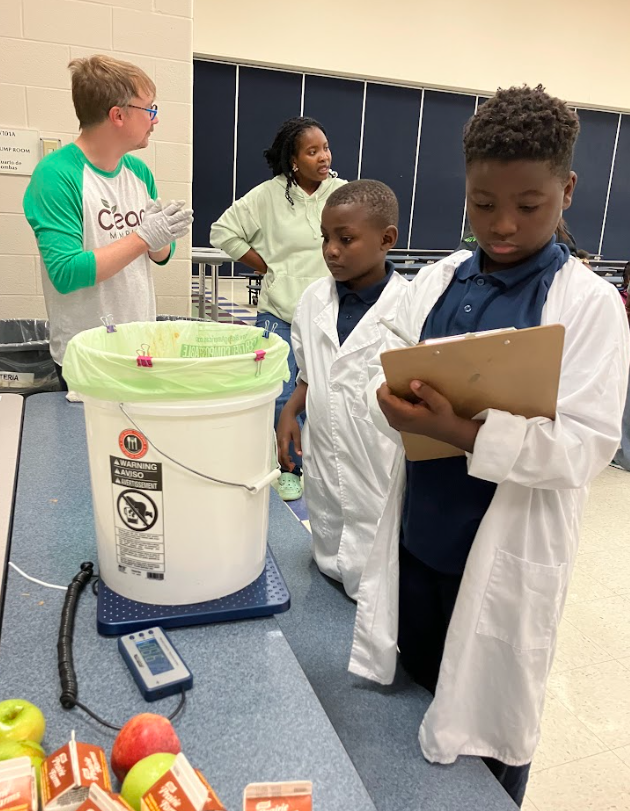
As part of a hands-on environmental education unit focused on food waste, PGF and Clean Memphis lead three-day cafeteria waste audits in local schools. Student teams rotate to sort leftovers, track shareable items, and measure waste. Opened milk is weighed separately, while whole, unopened foods are counted for redistribution. The team also surveys students about their food choices and eating habits, while monitoring the lunch line for inefficiencies that contribute to waste.
At the end of each meal period, PGF provides schools with concrete, data-driven recommendations to reduce waste at the source, such as adjusting portion sizes, modifying menu options, or improving practices so that students have more control over their selections. - Encouraging informed food choices
At lunch, USDA regulations require schools to offer students five food groups – protein, grains, fruits, vegetables, and milk; students, however, are only required to select three of the five, with at least one being a fruit or vegetable. Food waste audits often reveal that students and sometimes staff misunderstand these requirements.
For example, an audit might uncover that students believe that selecting milk is a requirement, even when it’s not. When students take items they don’t want, waste increases unnecessarily.
Food waste audits help schools identify these points of confusion and address them through clearer signage, staff training, and student education. Small clarifications in the lunch line can lead to immediate reductions in waste and meaningful cost savings, while giving students more agency over the choices they make each day. - Introducing expanded share tables
One of the most exciting outcomes of these audits is the development of expanded share tables. This allows students to place uneaten, appropriate food items they’ve chosen but don’t want to eat onto a designated table. Instead of ending up in the trash, this food is collected, maintained, and redistributed to ensure it’s used. Rather than being discarded, these items are safely collected and redistributed, allowing schools to offer additional food to students later in the day. - Educating students on sustainability
The hands-on nature of audits provides a unique learning experience for students, empowering them to live out sustainability in tangible ways. By actively participating in audits and managing share tables, students learn about the environmental effects and how their choices matter. This education helps instill lifelong habits of mindful consumption and waste reduction. - Redirecting valuable resources
Packaged foods like fruit cups and Lunchables are often the most expensive items on the menu. By rescuing these items through share tables, schools are mitigating waste and maximizing the value of their resources. Redirecting these foods to students who will eat them ensures that nutrition isn’t squandered. - Fostering a sense of empowerment
Perhaps most importantly, these initiatives show students that they have the power to make a difference. By participating in food waste audits, managing share tables, and spreading awareness, students become environmental leaders in their schools, homes, and communities.
Looking ahead
Through these audits, schools are gaining practical insights that help cut food waste, save money, and improve how meals are served.
Reducing food waste is a challenge that requires all of us to work together. With the support of students, teachers, and the broader community, these schools are proving that even small changes can have a big impact. Together, we can build a future where food is valued, resources are conserved, and sustainability becomes woven into everyday life.